Sunday, February 1, 2026

Playing With Fire - Chicken Thighs and a Chicken and Veggie Stew

A recent cold day gave me the opportunity to build a fire in my fireplace, which of course means cooking!

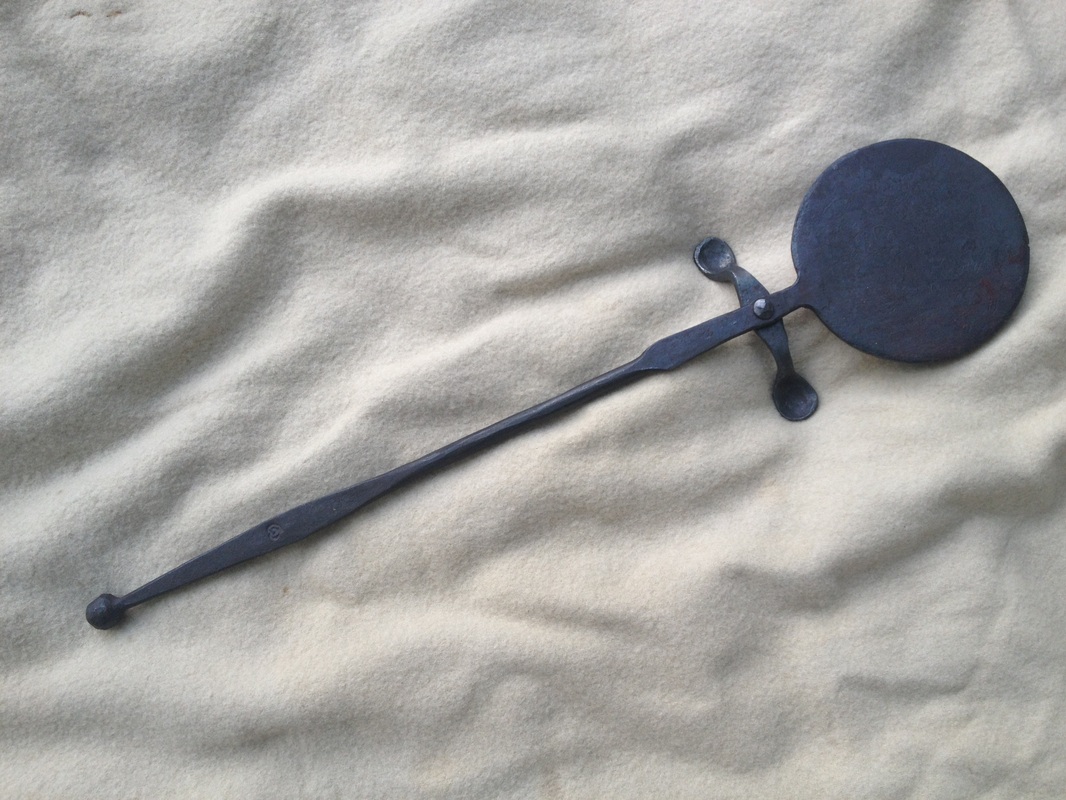
I didn't have any particular recipe in mind, I just wanted to play and see what I could make.  Also, I wanted to try out my new fireplace crane.
Lovely, no?

It is important to manage your fire and hot coals supply before, during, and after cooking.  You always have to be thinking ahead and considering, "Do I have enough to cook now?  Will I have enough later?  How quickly are the coals burning out and do I need to put fresh wood on the fire to start making more?"

A lot of these answers depend on the wood you are using and the foods you are cooking.  With practice, you can assess the situation quickly and adjust as needed.  When I do historical food demonstrations, I start with charcoal, which is easier to haul and use than chunks of wood.  

Sometimes I see television shows or movies portraying cooking with fire as a pot over robust flames (ahem, Star Trek Voyager and Neelix's kitchen!) but that gives you little control over the cooking process.  You need to be able to adjust the heat by moving coals in and out, sometimes under the pot but sometimes on top of or next to.  When I cook when flames are present, the pot is usually off to the side while the contents are stirred often and the pot rotated to offer the cooler side to the fire.  In very old kitchen setups, you will see areas where a few coals can be placed on bricks and the pot is set on a grate over them.  With this, you can get very gentle heat for delicate cooking.

So I lit the fire and waited for the coals to form.

This wood popped cinders often.  Note the small black chunks on the tile.

Then I pulled some coals towards me and started preheating my Dutch oven.
Those coals are HOT!
Into the pan went olive oil.  I had prepared the boneless, skinless chicken thighs by rolling them in breadcrumbs spiced with pepper, cinnamon, garlic powder, and paprika.  The following picture reminds me that you should always have a plan for where you will set your utensils.  I don't want to put them on the tiles.  In this case, the tongs rested on the plate that held the meat.  Sometimes you need a separate plate or bowl, depending on how many tools you are using.  

Gloves with leather palms work well for heat protection and are easy to put on or take off.
I used the tongs to put the thighs in the pan and wiggled them a little to help keep them from sticking.  They started sizzling immediately.  

(Note:  I learned the wiggle technique from Hank Shaw's website, "Hunter, Angler, Gardener, Cook", found here:  https://honest-food.net/  Look at his post for "How to Sear Fish."  Credit where it is due!)


I checked them often, and when the downside was browned, I flipped them and moved the pan further from the heat so they could cook thoroughly.

I love the crust they developed!

Notice that I put a lid on the pan at this point.  Remember how I said the wood was popping a lot of cinders?  I tell you, cinders taste bad and you want to keep them out of your food as much as possible.   I needed a long time to get the meat's interior cooked, which means exposure to cinders.  Cover your pans as often as possible.  Some of my pans didn't come with lids, so I use lids that I do have to cover them, even if they don't fit well.  I'm also in the process of making ceramic lids that will fit them.  

The pan is getting heated on one side now, but the bricks were pretty warm and the pan was still hot.  I was confident that the thighs would cook as I wanted them to.  I also reduced the number of coals in the cooking area.

When they were done, they had released juices into the pan.
Smelled good!

The thighs were cooked all the way through, maybe more than I would normally cook them, but they were still moist and tasty.


I decided last minute to make a gravy out of the pan juices.  I added more breadcrumbs and adjusted the spicing (including salt) to enhance the flavors.  This I cooked in the Dutch oven but on my stove.
A very thick gravy.

The meal consisted of chicken thighs topped with gravy, whipped sweet potatoes, and cranberry sauce.  You can find the recipe for the sweet potatoes by clicking here:   Cardamom-Scented Sweet Potatoes.
MMMMMM!
A very lovely meal indeed.

Hey!  I still had fire and coals and the time to make something that cooked slowly (while I enjoyed the meal).  So I made a chicken and vegetable stew and utilized the crane.

This time I used my large kettle (not the giant one you see in the corner of the fireplace).  I put in olive oil, chopped chicken thighs, and chopped onions.  I cooked them over hot coals, covered but checking them and stirring often, until the onions were transluscent.  A few times I rotated the kettle to warm up the cool side.

This is one of those situations when you need to think ahead about where the utensils would be placed  and where the hot lid would go while I was stirring and checking.  A nearby clean pot held the spoon when it wasn't in my hand, and the same pot held the lid when I was stirring the food.


The lid is too big, but it worked.

Then I added the rest of the ingredients, all canned: corn, garbanzo beans, green beans, tomato sauce.  I didn't throw any spices in until later.  I included the liquid from the green beans and corn, too.

After everything was stirred, up onto the crane it went!  Online reviews of the crane said it could hold a lot of weight, but I was worried anyway.  What if it pulled out from the wall?  Well, it didn't, and I was glad.  I built up the fire and put a lid on the kettle.  It was high enough that the live fire wasn't overheating the food.  

Lid went on after this picture was taken.

The beauty of the crane is that I don't have to lean into the fireplace and lift a heavy kettle up and out.  Safer, for sure, and easier on my back and arms.  It swings the kettle over to me, and I just need to lift it off the hook and set it on the hearth.

Aside from the occasional checking to see how the fire was doing and to stir the stew, I ignored the cooking process.  A lovely slow-cooking process ensued; I was looking for the tomato sauce to darken, which means it is well-cooked.

At some point I added spices:  pepper, garlic, salt.  After about three hours (or so), the stew was ready.


We ate it the next day, which allows the flavors to meld and develop.  Always a good thing to do with stews.


Of course it was good!  Success, twice!

It is always fun to play with the fire and cook something.  I'm hoping for another cool day in the near future so I can do it again.

Cheers!

Thursday, January 15, 2026

Huevos con queso - Eggs with Cheese, a Pinedo recipe

It's time for a Pinedo recipe!  If you are new to this blog, I translated Encarnación Pinedo's 1898 cookbook, El Cocinero Español (The Spanish Cook) and am attempting to get it published.  In the meantime, I cook from it and post the attempts here on the 15th of the month.  I also publish them on my Pinedo-only blog, "The Spanish Cook Without Equal", found here:  https://pinedo1898.blogspot.com/ 

Today's recipe is on page 127, "Huevos con queso" or "Eggs with Cheese."


My Translation

Keeping in mind that she was cooking over fire; the idea of browning with a hot fire is equivalent to broiling in an oven.

My Redaction

Per serving:

butter

1 slice bread

1/4 to 1/3 cup shredded cheese

1 egg

ground pepper

ground nutmeg

The butter asked politely to be included.

Melt butter in frying pan.  Add slice of bread, sprinkle most of the shredded cheese on the bread, break open the egg, and gently let it sit on top of the cheese.  Sprinkle the egg with the rest of the cheese and then with pepper and nutmeg to taste.

Set heat to low, cover the pan, let cook for 6 to 10 minutes or until egg is cooked almost to your liking.  When the egg is nearly cooked, place pan under the broiler for a minute or two to finish melting the cheese and brown it a little.

My Notes

She didn't say to use butter on the pan, but I did anyway.

I used mozzarella cheese, although I think a stronger flavored cheese would be good, too.

I tried this twice.  The first time the heat was 2 of 10, I did not cover the pan, and after nearly 45 minutes, the egg was not cooked and the bread was toasted too much.  I put a lid on it and let it cook a few minutes more before broiling it.  The result was an egg that was overcooked (I like runny yolks) and dry toast.  Not exciting.  My guest taster didn't realize that there were any spices on it, and I had trouble tasting them even though I knew they were there.

Build the bread stack in the pan.

Bread and cheese
Bread cheese egg.
Bread cheese egg cheese spices.  Use more spices.
After about 30 minutes of cooking.  The cheese melting but the egg is still uncooked.
After cooking under the lid for about 10 minutes.  Egg is cooked.
Under the broiler for less than two minutes.
Overcooked, in my opinion.

The Verdict

The second time the heat was set a little higher, 4 of 10, and I covered the pan.  After 8 minutes the egg was nearly done but the toast was burnt (ugh).  I didn't broil it because I didn't want to cook the toast any further.

I also used more spices, but not too much.  

What I got was an egg that was cooked just right and toast that was blackened on the bottom and not tasty.  I could taste the spices, which I liked.

Attempt #2, after about 8 minutes cooked under the lid.

Egg is just right.  Toast is burnt.

My conclusion:  use the lower heat and cover the pan.  No one wants to wait 45 minutes or more to eat their egg and toast.

So success?  Almost but I'm not sure I can really count it as such yet.  With a little practice I could get the timing just right and really enjoy it.

I think this would be a good meal to serve a crowd with these modifications:  Heat the oven to 350 degrees F, use a cookie sheet and set up each serving on the sheet so you can cook a bunch at a time.  You might not need to broil them but the broiler is right there if you do.  While one batch is cooking, set up the next.  

This also seems like a good camping recipe, since you get toast and an egg with one pan (and a lid!) and one cooking run.


Monday, January 5, 2026

Cranberry Calavo Salad - Addendum!

I was wandering around one of my favorite parts of the internet:  archive.org AKA The Internet Archive.  Since my interest lie in historical cooking, this site is a treasure trove of resources.  It is fascinating to explore!  Sometimes what I find is what I hoped to find, other times I find something completely unexpected.

This adventure was learning more about Genevieve Callahan and the columns she wrote while food editor of Sunset Magazine.  In looking for those, I stumbled across the recipe and description of the Cranberry Calavo Salad.  What is exciting is that it is given as pictures!

Here it is, as found by clicking this link.  Note that their scan of the pages cut off the title.

Cut calavos length-wise; peel and dress with lemon juice-

With French cutter, cut balls from canned cranberry jelly --

Peel and section oranges; cut segments in halves -
Pile cranberry balls and orange pieces in calavo shells --
Add French dressing, and serve on lettuce.

So I was close in my rendition.  I did one big spoonful of cranberry sauce, not balls.  (I used whole berry sauce, so for balls I think you would need the jellied cranberry sauce that was uniform in consistency.)  I also sliced my calavo halves instead of using them as a bowl.  I did not cut my orange segments in two.

But I also loved the way my presentation looked, I think I would like it better than hers.  (I'm just a little biased on that point!)

While looking around even more, I found variations that skipped the orange segments and used smoked turkey pieces or ham with the avo and cranberry.  These recommend putting the French dressing on the side.

What fun!

Thursday, January 1, 2026

Cranberry Calavo Salad - a recipe from the 1940s

It is the beginning of another New Year.  And again, I am astonished that I have been successfully maintaining this blog.  This is the start of my 15th year of food blogging!  I would not have predicted that I would keep it going, but it is so much fun to explore the worlds of food and food histories that writing the posts are not a burden.  They are a joy!  I love picking out a recipe, shopping and planning for it, then cooking and serving.  

One thing I've learned is that many historical recipes are very forgiving.  As they often don't have measurements associated with the ingredients, it is understandable that to be successful does not require a lot of nitpicky measuring and preparation.  Use your tastebuds, your observations (visual and olfactory), and your prior cooking experiences to help you get it right.  It doesn't always work out, but more often than not, it does.  

If you have an interest in being an historical cook, fear not!  Jump in and try it.  And have a contingency plan if the recipe just doesn't seem right.  I have, in the past, added an uncalled-for ingredient, cooked it longer, started over, adjusted the amounts called for, and well, thrown it out and ordered take out (or opened a can of soup).  Just be careful when you experiment on friends -- they need to understand the challenge you are facing and be willing to give it a try, as well as give very honest feedback.

As of this writing, the blog has had over 280,000 page views and this is my 340th post.  

Previously I wrote about several persimmon salad recipes from Genevieve Callahan's 1946 cookbook, The California Cook Book for Indoor and Outdoor Eating(You can search the blog for "Callahan" or "persimmons" to find them.)

For Indoor and Outdoor Eating
I've been learning more about Ms. Callahan and her influence on California cuisine, including reading a detailed thesis called "The evolution of Sunset Magazine's cooking department: The accommodation of men's and women's cooking in the 1930s" by Jennifer Hoolhorst Pagano.  Click here to see view it.

Callahan used her editorial position at Sunset Magazine to help people who lived in the West learn about interesting foods and how to prepare and serve them.  One salad that caught my attention was called "Cranberry Calavo Salad."  It is described rather than given as a recipe with specific measured ingredients:
A typical "salad" topped with French dressing and served on a lettuce leaf, but composed of canned cranberry jelly, California avocado halves, and California orange sections.

Intriguing!  I wondered how I would compose and present this salad, so of course I had to give it a try.

My Redaction

Cranberry Calavo Salad

Per person, as served on a small salad plate:

two small decoratively cut or torn lettuce leaves to cover the plate

1/2 ripe avocado, cut into slices

1 large spoonful canned cranberry sauce

5 orange segments

a significant drizzle of French dressing

Wish-Bone dressing, a taste from my childhood

Put the ingredients decoratively in layers on the plate:

Lettuce, then avocado slices (tilted slightly to the side).

Spoon the cranberry sauce into the middle of the avocado.

Arrange the orange segments in a star formation around the avocado.

Drizzle the dressing around the edges of the cranberry.

Serve with a knife and fork!


See how I tilted and spread the slices?


My Notes

I used green leaf lettuce because that looked fresh and inviting in the store.  In the 1940s, I would imagine that iceberg lettuce would be the more common choice simply by availability.  I have not researched it but am relying on my personal experience in the 1960s.

I had homemade cranberry sauce in my kitchen, but I stuck to the recipe and used canned, whole berry sauce.  

My orange was a Naval because who wants seeds?

The French dressing poured out faster than I expected but I don't think I over did it.

The Verdict

First, look at how pretty it is!  The colors are inviting, eye-catching, appealing.

I served it with a knife and fork (as the side salad to the main course) because you want to cut up the lettuce and the orange segments.  My goal for the first few bites was to get avo, orange, cranberry, and dressing on the fork, and maybe a little lettuce, too.  I wanted to see how those flavors combined in my mouth.

Wow!  They did well together, and I was impressed with how fresh the salad tasted.  My guest taster and I really enjoyed the combination.  I felt it was a light, refreshing accompaniment to the chicken and potatoes main dish.  After several bites, the idea of getting some of each flavor on my fork was over and that was not a problem.  I also enjoyed the extra dressing on the lettuce.

Success!  Easy to assemble and serve, looks great, tastes wonderful.  I recommend it for a small dinner party.  It would certainly be easy on the host to prepare.

Happy New Year 2026!!

Monday, December 15, 2025

Vanilla Caramels, one of my Most Favorite recipes

I reserve the last post of the year for one of my favorite recipes.  (I still did a Pinedo recipe posted today but on the Pinedo-only blog, pinedo1898.blogspot.com.)  This year I dithered and fretted and wondered which recipe to pick.  I'm not sure why; it is not like I don't have any choices.  I have a little book which I purchased in the mid-1980s that I designated as my "Favorite Recipes" book.  It is one of those blank books with lined pages so you can fill in as you please.

When I bought it, I had no idea I would ever be writing a blog.  I didn't even know what a blog was, and the internet wasn't very developed, so writing in a book was a great way to document what I liked so I could find those recipes again easily.  I have tapped into this book several times over the 14 years of writing this blog.  So, while dithering yet again, I brought it down off the shelf and perused it.  

Aha!  My vanilla caramel recipe appealed so much, because it is a good recipe (hey, it is a favorite for a reason!) and I have an upcoming social gathering where I wanted to bring something to share.  This group has tasted my experiments before, so I had a standard to uphold...

The recipe is dated 12/21/87 and is the second recipe in the book.  I put a note that I got the recipe from the San Diego Union-Tribune newspaper (does anyone know what a printed paper newspaper is these days?).  It is fun and easy to make, and I added a comment at the end which I will add at the end of this post.  Here goes!

Vanilla Caramels

1 cup white sugar (see my notes below)
1 cup light corn syrup
1/4 cup butter (or margarine, but really.)
1 cup cream
2 teaspoons vanilla 

A simple list for such a good candy.
Mix all ingredients in a heavy saucepan.  Let boil over medium heat, stirring constantly, until a few drops of the mixture in cold water form a firm ball.  (240 degrees F or soft ball stage on a candy thermometer).  Remove from the heat and pour into a buttered 8 x 8 inch pan.  Cut when cool and wrap in waxed paper.

My Notes

It is important to expand on the simple directions regarding cutting and wrapping the candies.  See the end of these notes.

Be generous in buttering the pan.  It is easier to remove the candy if it is not sticking to the pan.  Prepare the pan before starting the cooking process.

I used a 6 x 10 inch pan instead of an 8 x 8.  I used a glass pan.  Metal also works.

I used my homemade vanilla sugar instead of just white sugar.  Either is fine, but I really like hitting hard on the vanilla flavoring.  I also used my homemade vanilla extract, which is vanilla beans soaking in vodka.  You can read about vanilla sugar by clicking on this sentence.

The saucepan shape I recommend is tall and narrow.  Not that I have that, but using a narrow pan (small diameter bottom) allows the mixture to be high enough to properly cover the candy thermometer, and tall gives room for the mixture to rise while cooking so as not to overflow.  I chose small diameter.

To get medium heat, I set the burner to 4 or 5 out of 10.  There is a point in the cooking where the mixture bubbles up and rises quite high, even though you are stirring it constantly.  Turn the heat down as needed to keep it from overflowing, then turn it back up again when the mixture settles back down again.

You really do have to stir it continuously.  Don't worry, you won't have issues with the candy sugaring or other problems.  Stand at the stove and keep the mixture moving the whole time it is cooking.  It doesn't take a long time to reach the right temperature.

Mostly pour the candy out into the pan.  Be careful about using a scraper to get the mixture sticking to the pan, because it is typically cooked to a higher temperature than the bulk of the mixture, and will change the way you feel it when you are eating it:  it brings in a crunch or other hard parts.

Ready for cooking.

At about 200 degrees F, the level rises, threatening to overflow.

At temperature.  Note the level is back down.

Cooling now.

I let it cool overnight.  To remove it from the pan, I used a wide spatula slid between the candy and the pan's side and pushed to separate the two.  Once I had gone all the way around, I used the spatula to start lifting the bottom up.  This is when generously buttering pays off.

Once the candy slab was free, I flipped it out of the pan and onto a piece of waxed paper.  

Then I buttered the blade of a butcher knife and cut the slab into rods.  After that, I cut the rods into small, bite-sized pieces, about 1/2 by 1/2 inch.  Not much bigger!  

The waxed paper wrappers are cut into no smaller than 2 by 3 inch pieces; 3 x 3 is probably better.  You need enough to go around the candy with overlap (the smaller dimension) and then "wings" that are twisted to hold the wrapper closed.  My preference is to twist so that the edge of the overlap is being pulled toward the candy.

I recommend cutting the wrappers while the candy is cooling.

Push!

Cooled candy, ready for cutting

Rods, about 1/2 to 3/4 inches wide

Cut candies, ready to wrap.

Wrapping process.

The Verdict

One batch produced about 120 candies.  A good supply for trying and sharing!

Ooo!

This batch was very good.  The candy cooked to 240 degrees F stuck more to itself than to the pan or my teeth.  It was soft so as not to stress my jaw with chewing but firm enough to hold its shape without flowing.  It had a lovely vanilla flavor without being too strong.  Success!  Adults like this because it is not bitingly sweet.

In the past I have cooked it to 250 degrees F, which is still softball stage but makes a firmer candy.  I recall it being stickier and chewier, which is not always pleasant.  Aim to 240 degrees and pull it off the stove right away.

I have wondered if I should add the vanilla extract after the cooking is done.  I have never tried it. 

The final comment in my written book is this:
Variation - leave out the cream, boil until it forms a crunchy ball in cold water (soft crack stage), add sliced almonds to make almond brittle or anything else that sounds good!
I vaguely recall doing that a few times, but can't really comment on it other than it must have worked or I would not have written it in.

Also, in the past I have kept some candies for a while to see how they would store.  I recall that they absorbed water from the air and their texture changed, not for the best.  This gives you an excuse to eat them, I'd say within a month, and to share them with friends.