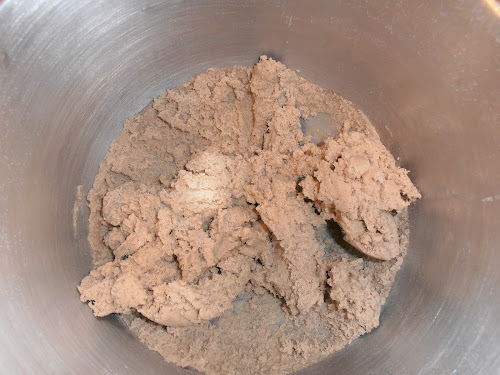
Showing posts with label German honey cake. Show all posts

Friday, November 24, 2023

An Update on the Medieval Lebkuchen

Previously I tried a recipe for Lebkuchen (click here to see the post) that suggested the dough and the cookies get better with time.

So I baked a batch and put them away in a dark cupboard.  I also put away two large containers of dough.

It has been three months, so time to check in on them.  How are they doing?

The cookies looked the same as when they were put away:

Three months old
The dough looked the same, too!

No mold on the surface.
My guest taster and I tried the cookies.  We could not detect anything different from what we had tried before.  Spicy, a little chewy.  (Still almost too spicy for me.)

So I took some of the dough from the top and shaped it into a short log.


I felt that the dough was drier or less tacky than it had been previously.  I could shape it easily with my hands without getting all covered in dough.  

Then, with a greased knife, I cut the log into approximately 1/4 inch-thick slices and prepared to bake them.  Forgive me; I was not trying for beautiful cookies at all, and it shows.

Don't judge!
I baked them at 350 degrees Fahrenheit for about 10 minutes.  That is when they looked like they were done.


My guest taster and I both agreed that these cookies were fluffier (less dense) than the previous batch.  We also felt that the spices were less intense, which I appreciated very much.  I liked them!

So we enjoyed a few then put the rest into the container with the first batch, marking them separately so I can track how each batch does over time.  My calendar is marked to check in on them in another 3 months.

So far, so good!

Sunday, October 1, 2023

Lebkuchen or German Honey Cake, the 1553 edition

After having attempted and, finally, succeeded in making German Honey Cakes via Laura Ingalls Wilder (click on these posts to view the saga: attempt #1, attempts #2 and #3, and success at last), I decided to try a 1553 recipe for Nurnberger Lebkuchen as found in the Sabina Welserin cookbook, Das Kochbuch der Sabina Welserin, as translated by David Friedman.  Click here to see the translation.

What makes lebkuchen special is that the baked cookies are said to last a long time without spoiling, staying moist and flavorful.  Also, the dough does not have fat or eggs, so it can be stored unbaked for months and even years, and it supposed to develop a better flavor with time.  It was an item of wealth in medieval times, where bakers would invest money in jars and ingredients, and mature dough was given in dowries.

My goal was to make the dough with the intent to let it rest and mature for many months.  I'm not sure how long, and I might do some test baking along the way to assess any changes.  Here is the part of the recipe I was using:

163 To make Nürnberger Lebkuchen

Take one quart of honey, put it into a large pan, skim it well and let it boil a good while.  Put one and a half pounds of sugar into it and stir it continually with a wooden spatula and let it cook for a while, as long as one cooks an egg, pour it hot into a quarter pound of flour, stir it around slowly and put the described spices in the dough, stir it around slowly and not too long; take on and a half ounces of cinnamon sticks, one and a half ounces of nutmeg, three fourths of an ounce of cloves, three ounces of ginger, a pinch of mace, and chap or grind each one separately so that they are not too small, the cinnamon sticks, especially, should be coarsely ground.  And when you have put the spices in the dough, then let the dough set for as long as one needs to hard boil eggs.


I gathered my ingredients and had at it.

My Redaction

1 quart honey (about 3 pounds)

1 1/2 pounds sugar

1/4 pound flour

2 ounces ground cinnamon (see my notes, below)

1 1/2 ounces ground nutmeg

3/4 ounce ground cloves

2 1/2 ounces ground ginger (see my notes, below)

a pinch of mace

And the mace.
My Notes

It did not go well.

First, and I take responsibility for this decision, I boiled the honey and the honey-sugar mixture too long.  I made a hard-crack candy that in no way resembled a dough.  Afterwards, I read more about lebkuchen and now believe the honey should be heated to just boiling for two reasons:  to dissolve the sugar and to make it easier to mix in the flour.  But no cooking beyond that seems necessary.

Despite all my planning and shopping, I discovered I only had 2 1/2 ounces of ginger, so I used that and put in another 1/2 ounce of ground cinnamon in its place.  The entire amount of spices was a lot!  It turns out it was too much.  More on that below.

Almost 7 ounces of spices by weight

I was skeptical about the amount of flour.  It seemed like it was not enough to actually make a dough.  I was right:  what I ended up with was a vat of goo, not dough.  It was still goo even after mixing in the spices.

Mixing in the flour.


Mixing in the spices.

I put the goo into a jar to let it cool, then thought about how I would address the problem.

Note the total amount that was made.

Yes, I ended up with a solid mass in the glass jar (why did I put it in the jar???).  Clearly this was not the intended result.  

So I put the jar into a pan filled with hot water and put some more water on top of the solid mass in the jar.  After letting it heat for a while, the mass softened enough that I was able to pour it out of the jar and into a saucepan.  

A low heat allowed the mass to dissolve into the water, then I brought it to a boil and cooked it until it was nearly at the thread stage, about 220 degrees Fahrenheit.  It seemed to resist getting hotter, and I didn't want to scorch it.

Then I mixed in more flour.  I lost track of how much flour it was -- I just kept adding flour and mixing until the mass started clinging to itself more and acting like a dough.

This made a very dark dough, and I took two small balls of it and baked it on a greased pan in the toaster oven at 350 degrees for 10 minutes. 

The cookies smelled good and were baked just right.  However, they tasted awful:  all I got was a too-strong spice flavor that was decidedly unpleasant.  

I didn't want to throw it away and declare a failure.  It seemed that I just needed to dilute the spices to get a better cookie.

So I added about three more pounds of honey and one cup of sugar, heated to just boiling, and mixed in well.  Then I added more flour, mixing in a cup at a time until I couldn't stir it by hand any more.  At that point I put big scoops of the almost-dough onto the counter and mixed in more flour by hand (gently kneading) until I had a soft, almost sticky dough.

Huge!  I guess it weighed about 10 pounds.

I baked two more cookies.  They were lighter in color than the awful ones, and their taste was much better.  The spices were still strong but not repellant.  The cookies were moist and lightly browned on the edges.  I decided that was enough.

What a color difference.

It was a huge amount of dough.  I filled two jars with it, then baked the rest:  I rolled the dough to about 1/4 inch thick, used a cutter to get the cookies, then baked them in the toaster oven at 350 degrees for 7 minutes, which was right because they were thinner than the hand-formed balls I practiced with.  Notice that I did not follow the given directions (see the Friedman webpage) for baking them.  Maybe I will at another time.

Rolling and cutting

Baked.

Dough for storing.

The Verdict

The cookies were good.  Not mouth-wateringly spectacular, but good.  I think they would be improved with the chocolate frosting (see the Wilder post attempt #1) or a simple white frosting decoration.  They also seem to ask to be eaten with coffee or tea, or dunked in milk.  They were moist, not crisp, and I might try baking them longer to see if I like crisp.

I took four cookies and baked them at 350 degrees for 8 minutes.  This made them hard (not really crunchy or crisp) and not comfortable to eat.  Then I brushed them with rose water and let them dry.  This improved the flavor but were still to hard to eat comfortably.

I also took two baked cookies and brushed them on both sides with rose water, then let them dry.  My guest taster and I both agreed that this new flavor improved the cookie eating experienced.  I recommend it!

The dough jars were covered with a lid and put into a cool, dark cupboard, along with a box of the cookies.  Everything had the date written on them, and I put notes on my calendar to check on them.

When I check in on them, I will report back.

I declare this a success.  It took a lot of effort and perseverance to achieve it, but I believe I did.  Part of the effort was all the clean up:  every pan and utensil had sticky goo on it, as did the counters and stovetop.  Fortunately, it was all sugar-based goo, which cleans up completely with hot water and patience. 

Now I will apply more patience while the dough and the cookies mature.

Whew!


Saturday, April 15, 2023

Wilder's German Honey Cake -- Success at last!

Previously I tried Laura Ingalls Wilder's recipe on German Honey Cake as she reported it from her visits to the 1915 Panama Pacific International Exposition.  It was not a success; I felt like I had baked bricks.  Visit the first post by clicking here.  

I tried it again (twice!) - attempt number two was goo and number three was "almost a cookie" but not quite right.  Visit the second post by clicking here.

Now here I am with two more attempts to report.

My first goal was to get the right amount of flour.  After finding that 2 cups was too much and, that 1/2 and 1 cup were too little, I tried 1 1/2 cups.  

What I saw was that the dough looked dry at first, but if I gave it a minute or two to sit, the flour hydrated.  It went from dry to moist and only somewhat sticky.  It did not pour into the pan as Wilder said it would, but it did spread if I insisted.

The flour quantity looks just right!
It went into the 350 degree oven for 15 minutes.  The edges were cooked but the middle still looked damp, but I pulled it anyway.


I let it cool and cut a piece.  Sure enough, it was very damp in the interior.

So I put it into the toaster oven at 350 degrees for a few minutes.  That cooked it to a better level.

I decided to rebake what was in the pan.  I put it into the regular oven while it was heating to 350 degrees.  After the top browned better, I let it cool and tried a piece.

Yes, much better!  It was still damp inside but did not look or taste uncooked.  The next day I took the batch to work -- my colleagues gave me positive feedback.  They liked the taste, it was not too chewy (I was a little worried), and even the person who dislikes ginger in cookies thought it was good.

So I wanted to try it one more time to see if I could get the whole recipe, including the baking, right.  And I did!

Here is the final version:

1 cup honey
1/2 cup sugar
1 teaspoon ground cinnamon
1 teaspoon ground ginger
1 teaspoon ground cloves
2 teaspoons baking powder
1 1/2 cups flour

Beat the honey and sugar together for 20 minutes.  (I used a mixer.)  While that is going on, preheat the oven to 325 degrees F for a glass pan or 350 degrees for a metal pan.  Butter the pan well.  (I used an 8 x 12 inch glass pan.)

Add the spices and mix well.  Add the baking powder and mix well. 

Mix the flour in by hand.  I liked putting in one cup, mixing, then adding the last 1/2 cup.  It will look dry at first but then the flour absorbs the moisture from the honey.  Let it rest for a minute or two while this happens, then stir until the flour is mixed in well. 

Scoop the dough into the baking pan and spread it.  You will have to push it, but the dough is sticky and not too firm.

Bake until the edges look dry and the middle is puffy and shows some browning.  20 to 30 minutes.

Let cool, cut into squares, and enjoy.  

You can put the chocolate icing on it; another tradition is to use a lemon glaze.  It is also good without any icing.

I found that if I let the batch sit in the pan for a day, covered, that the moisture evened out, especially on the edges that were cooked more than the middle.  The cookies were softer and more enjoyable to eat.

My guest tasters at home thought the cookies were particularly good with a cup of coffee.


Saturday, April 1, 2023

Takes 2 and 3: German Honey Cake via Laura Ingalls Wilder

Previously I tried Laura Ingalls Wilder's recipe on German Honey Cake as she reported it from her visits to the 1915 Panama Pacific International Exposition.  Visit that post by clicking here.

ISBN 0-06-440081-6
It was not successful.  The cake or cookies came out as too hard to eat, and it wasn't until I had them stored in a bag with a damp paper towel for several days did they get reasonably soft enough to bite without too much discomfort.

I speculated that her liquid-to-flour ratio was off.  Comparing her ratio to other recipes I found both in my books and on the internet, I thought she needed to use 1/2 cup of flour instead of two cups.

So I tried the recipe again:  I beat the honey and sugar together for 20 minutes, mixed in the spices, mixed in the baking powder, then hand-stirred in the flour.  I definitely had a batter that I could pour into a well-buttered pan.  Take 2!


After 18 minutes in the oven at 350 degrees F, I saw that the mixture was bubbling (almost bubbling over the edges of the glass dish) but not firm.  But I took it out and let it cool, just to see.  

Right out of the oven.
After cooling.
In the meantime, I made another batch of the (luscious) chocolate frosting, cooking it to 220 degrees F instead of the 230 degrees I did last time, and using more water to start with.  I also used some water to wash the sides of the pan, hoping to avoid sugaring.

Once it had reached temperature (but no threading showed up in the cool water test), I poured it over the mixture in the baking dish.

And then it sank.
Not surprisingly, the chocolate topping sank through the mixture.  What I had was a pan of goo -- spicy, sweet, tasty goo with chocolate syrup underneath -- but goo, nonetheless.  Failure.

Clearly 1/2 cup of flour was not enough to produce anything that resembled a cake or cookies.  My speculation was way off!  I let it cool completely and thought about what to do next.

Even though I could reasonably expect to separate most of the goo from the chocolate syrup, I decided it wasn't worth it.  The honey mixture's water content was changed from when I started Take 2, so I chose to just mix in more flour to the combined goo and syrup to see if I could get it to something that resembled a cake.

Tasty goo.

Take 3!  I stirred in 1/2 cup of flour by hand, a little at a time.  At that stage, the goo had turned into something that resembled a cake batter -- thicker but not too thick.  It was still soft enough to spread into a greased pan.  This time I chose a wide pan with short sides and baked it in the toaster oven at 350 degrees.

Goo with flour added.
In a wide, short pan.
It, too, bubbled up and got puffy.  It went over the sides of the pan.  After 15 minutes, I pulled it out (and cleaned the oven).  It cooled.

A mess, but not difficult to clean.
The result was dubbed "almost a cookie."  It was still sweet, spicy, and had a wonderful chocolate flavor throughout.  But it wasn't quite a cookie, more like a soft candy:  it held its shape, was sticky but not to everything, and had some bite resistance.  It also had an underlying taste of not-quite-cooked flour to it.  
It reminds me of the molasses lace cookies I've made before.
It held its shape!
Yet another failure.  However, I feel that I was closer to success!  I need to try Ms. Wilder's recipe again, and perhaps the chocolate topping recipe, too.

Stay tuned for the next installment of "Trying to Get It Right!".

Wednesday, March 15, 2023

German Honey Cake via Laura Ingalls Wilder

 I was reading about California history in the early 1900s, and I came across this book:

ISBN 0-06-440081-6

It is a collection of letters from Laura Ingalls Wilder (some are written by her daughter, Rose Wilder Lane) to her husband, Almanzo Wilder.  Ms. Wilder traveled from her home in the Ozarks to visit Rose and her husband, Gillette Lane, in 1915.  While there, Ms. Wilder visited the Panama-Pacific International Exposition.  When she returned home, she wrote an article about it for the Missouri Ruralist in November 1915.  

Click here to view a image of the first page of the article.

And click here to see a list of the articles she wrote.

And click here to see the entire article. This is a PDF so look at pages 20 - 22.  

Thank you to pioneergirl.com for compiling all this information!

In it, she discussed the modern upgrades for food preparation as well as imported foods she saw and tasted in the Food Products Building.  It made her reflective, in that the imported items from far away places were intriguing, but then she realized that the wheat and other farm products she was familiar with were also being exported to those exotic locations. 

She noticed, too, for example, that she had always seeded and cleaned raisins by hand, but she saw machines that seeded, steam-cleaned, and packaged raisins much faster than she had thought possible.

Ms. Wilder also included recipes from some of the booths she visited, which were mostly breads from various cultures.  The one that caught my attention was on page 123.

German Honey Cake

One cup honey, molasses, or syrup; 1/2 cup sugar, 2 cups flour, 1 teaspoon cinnamon, 1 teaspoon ginger, 1 teaspoon cloves, 2 teaspoons baking powder.  Beat honey and sugar 20 minutes, then add the spices, the baking powder, and lastly the flour.  Pour into well-buttered baking sheets and bake 15 minutes in a moderate oven.  Cover with chocolate icing and cut in squares.


My Notes

Notice this makes cookie or cake bars, but does not require any eggs or added fats, like butter.  It struck me as an unusual recipe, so I started looking around the internet for more information.  

What I learned was that this recipe, given to us in 1915, had a connection to recipes made in Germany 400 years ago.  This blog, Researching Food History, has a post on Lebkuchen that uses almost the same ingredients.  It does not have baking powder, as that hadn't been invented yet.  I looked around at some of my cookbooks and found a similar recipe that calls for potash as a leavening.  But in the 1500s recipe, there was no leavening at all.  

I knew I had to try Ms. Wilder's recipe.

As per the instructions, I beat the honey and sugar together for 20 minutes, using the lowest speed on my mixer.  

Before mixing
After 20 minutes of mixing
It appeared that the long mixing time gave the sugar a chance to dissolve somewhat into the moisture of the honey.

Then I mixed in the spices with just a few turns of the beater, and then the baking powder.  Finally, I put in the flour and mixed it just enough to make a stiff dough.  

With spices and baking powder.

The dough
Note that I did not get a batter that could "pour" into well-buttered baking sheet.  It was a very stiff dough.  I buttered my hands and pushed it around the 10 inch by 15 inch baking sheet until it was a thin layer that reached all the way to the edges.
It took a lot of pushing!

Then I baked it at 350 degrees F for 15 minutes.  

It looks great!

When it came out of the oven, it cooled while I made the chocolate glaze, using the recipe from this site.
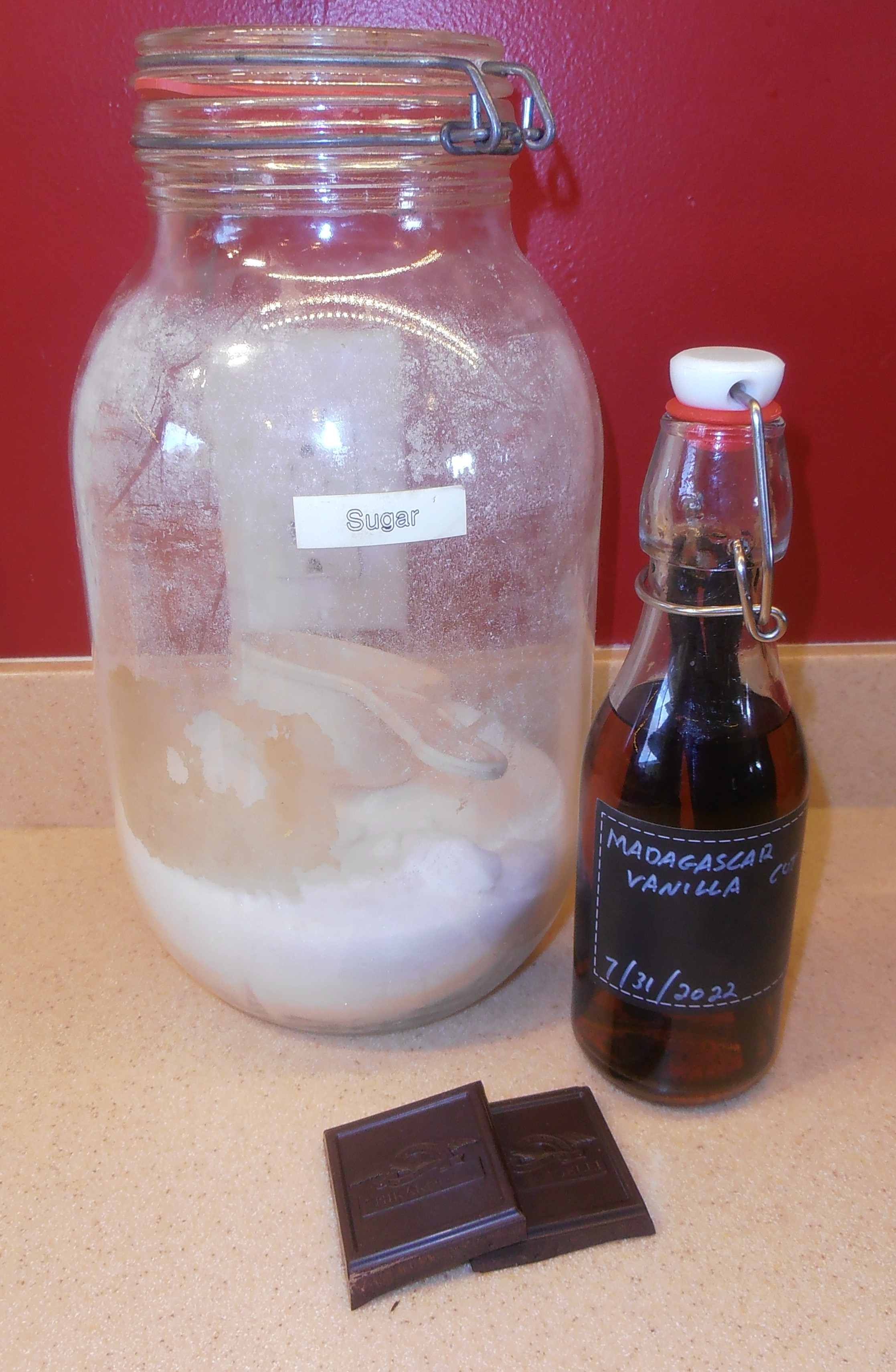
Just add water.

1 cup sugar

2 Tablespoons (1 ounce) baking chocolate, chopped

1/4 teaspoon vanilla 

a little water

Boil it until it threads.  Pour over cake.  Let it sit in a warm oven to get a nice sheen.

My Notes

Thread stage is 215 to 235 degrees F.  

I wasn't sure what "a little water" was, so I put in just enough to melt the sugar and start the cooking process.  It didn't take long to get to 230 degrees, which is when I poured it on the honey cake, spread it, and then put it in the still warm oven for about 8 minutes.

Just a splash of water.  Not enough.

More water, to make it flow.

At about 230 degrees

The Verdict

It looked good, despite the poor job I did of making the glaze.  You can see that the glaze sugared, and did not spread easily.  I probably should have used more water to get it started, and then only cooked it to 215 or 220 degrees F.  But the glaze stuck to the honey cake, so I was happy with that.


Now for the cake.

Well, frankly, it was pretty hard.  I had to really work to cut a square out of the corner for a taste test.  Once it was out, it was hard to bite into.  Not impossible, but certainly challenging.

A good picture but not a good eat.

But I could bite it, so I can report on the flavor.  The spices came through!  They were warming and balanced, and strong enough to make the little cake square interesting without being too strong.  My guest taster described it as "zesty!"  The chocolate glaze was a good choice -- I could taste the chocolate but it mixed with the spices for a good blend.  My guest taster said, "You can certainly taste the chocolate, but the spices, too."

But oh, it was so hard.  I wondered if her recipe called for too much flour.  If it was supposed to be a batter I could pour, then too much flour would be the reason it was so stiff.  Still, I had seen other recipes around the internet that talked about "pounding the dough into the pan."

Another thought I had was how the recipes emphasized letting the baked cake or cookies "age" for a day or two, to let the flavors develop.  I wondered if mine would soften by absorbing moisture from the air.  Then, perhaps, I could cut it.

So I waited.  The next day, it was a little softer:  easier to cut and to bite, but still too hard to make me happy.  The flavors seemed better developed, but I was not sure.  The second day of sitting out on the counter really showed very little change.  It was, perhaps, a tiny bit softer.  It was stressful on my jaw to bite into it.

I've given this a lot of thought, and I compared Ms. Wilder's recipe to others I've seen that were similar.  My conclusion is that her recipe calls for too much flour.  One recipe has a ratio of 2 parts honey and sugar syrup to 1 part flour, so Ms. Wilder's recipe should call for 1/2 cup flour instead of 2 cups.  That should make a batter than can spread.

I want to try that.  If I can, I will, and it will be on a future post.  

I can't really call it a success, although the chocolate frosting tastes great with the spices.  If only the cake was softer!  

Better luck next time.  The spices do make my kitchen smell good.

Cookies Consent

This website uses cookies to offer you a better Browsing Experience. By using our website, You agree to the use of Cookies

Learn More