Showing posts with label Russia. Show all posts

Saturday, June 15, 2019

Chakapuli, a Lamb Stew from Georgian Russia

A few months ago I was treated to dinner at a Russian restaurant.  I had looked at the menu online in advance, so I knew I wanted to try chakapuli.  It was described as a lamb stew with onions, tarragon, wine, and plum sauce.

I had no idea how it would taste but I knew I wanted to try it.  And it did not disappoint:  The lamb shank was served in the bowl and rice was on the side, which I mixed into the stew as I ate.  The broth was rich and flavorful, and I loved every bite.

That, of course, meant I needed to try it at home!  There was a challenge in making it myself:  the plum sauce was made from unripe plums, which are not always found in the markets.  I read many recipes online and some of them said to use tkemali sauce, which is made from the plums and can be purchased online.  Well.  I really wanted to avoid purchasing the tkemali sauce because I had found recipes for it.  But it all came down to finding the unripe plums.

My local imported foods market had never heard of tkemali sauce but the other day I went in hoping to find canned unripe or sour plums.  I asked for them and -- hooray! -- was sent to find fresh, FRESH unripe plums that looked just like all the pictures I had seen online.  I was happy to bring a bag home, along with a bunch of fresh tarragon that was just asking for my attention.

I had already procured the lamb shank, so I felt like I was ready to try chakapuli.

I don't have a specific recipe that I followed for this post.  Chakapuli is such a beloved stew in Georgia that there are many variations, probably as many as there are families who make it.  Some called for hot chilies, others for waxy potatoes.  Some required tkemali sauce but others just said to use the plums and add the spices that would be in the tkemali sauce right into the stew.   I wanted to reproduce the version I had in the restaurant, so I decided to skip making the tkemali sauce.

For the seasoning, I chose the spice mix my daughter brought home from her trip to Uzbekistan.  My Russian friend tells me it is a "Universal Spice Mix", and it has dried herbs and vegetables as well as a variety of spices.  I've tried it before on baked chicken and in other stews, and liked it.


The ingredients are approximate as I didn't really measure.  Basically I crossed my fingers and hoped for a good result.  Do you know how hard it is to cook with your fingers crossed?

My Version

1 lamb shank
1 - 2 tablespoons butter
1 to 1 1/2 cups white wine
4 cups water
a good sprinkling of the Universal Spice Mix, or whatever spice mix suits your fancy
a heaping teaspoon of minced garlic
half a bunch of tarragon
half a bunch of green onions
about 1/2 cup parsley
8 to 10 unripe plums

I used about half of the herbs and onions you see here.

I used a big Dutch oven for the whole process.

Melt the butter and then add the lamb shank.  While it is browning, strip the leaves off the tarragon stems, throw the stems away, and coarsely chop the leaves.

Check the shank and turn it to keep browning it.

Trim and slice the green onions.  Pull the parsley off the stems (a few stems are fine) and chop those.

Lovely herbs!
When the lamb is nicely browned, pour in the white wine and reduce by one half or more.  You can see it deglazing the pan.
Browned and now the wine is reducing
Once the wine is reduced, add in the other ingredients.  I saved the spices for last and sprinkled it all over everything.

Getting hotter now
Bring it to a simmer, put the lid on, turn the heat to low, and go do other things for a few hours.

It is ready when the meat is tender and falling off the bones.  The smell is heavenly but you have to wait patiently!

Now a lovely stew
I added a little salt (about 1/2 teaspoon) at the very end.  I also pulled the rest of the meat off the bone.

The Verdict

I served it over some very dry European style bread.  More (fresh) bread was on the side as well as some butter.  White wine (the same as in the chakapuli) was the beverage of choice.  Fresh apricots were dessert.

You really want more plums than this in your bowl
The meat was tender enough to cut with a spoon but not overcooked.  The hard plums had softened into squishy balls of fruity-but-tart morsels.  (Beware the pit.)  The broth was rich and meaty, and the herb flavors came shining through.  It was also a little tart but more like a background flavor.

The broth was very well balanced in flavors, but every so often the slight licorice flavor of the tarragon dominated in a spoonful.  This was not a problem!  It made for a tasty dance on my tongue.

The dried bread made a perfect sponge for this stew which I would have called a soup because of the amount of broth.

Success!!!

It was just the right amount to serve for two.

I know that fresh, unripe plums have a tiny window of sales in the market.  I think I just happened to get lucky that the market had them on that random day I wandered in.  What will I do if I want to make this at another time of year?  It is traditionally a springtime dish, which coincides with the plums.  I think, if I can get some more, I will freeze them.

One wonderful feature of this recipe is how easy it is to prepare:  all of it uses one cooking pot; once everything is in, you put the heat on low and ignore it, and you serve it in a bowl.  Simple, savory, good.

I can also say that this recipe gives me a heightened appreciation for fresh herbs in my cooking.

The Second Time

I tried the recipe again the next day, using a lean, boneless pork roast, about 2 pounds in weight.  I used up the rest of the plums and put the roast in whole for cooking.  There were about twice as many plums in this batch as in the previous.

Once it had cooked for two hours, I took two forks and shredded the pork.

The result?  Everything was still very tasty -- the broth was a little more sour than previously but not in a negative way.  The only thing I could say is that the pork wasn't as tender or flavorful as the lamb.  It was a little dry, even after the shreds soaked in the broth for an hour or so.  But we still ate and enjoyed it!  I would recommend the lamb over pork, or to try a fattier cut of pork.


Wednesday, July 4, 2018

Fish in a Fur Coat

After reading the Google translation of this recipe's title, I laughed, and so I knew I had to try it for my blog!

The original website is in Russian, and I just happened across it one day.  Even though I can't say it is historical, I thought it would be good foodie fun.

Original recipe, in Russian:  https://bonappeti.boltai.com/topics/zapechennaya-ryba-v-shube/

Google translation:

Baked fish in a fur coat

500 g lean fish fillets (pollock, cod, pink salmon) 
5 eggs
1/4 cup of crushed walnuts
3 tsp. lemon juice
salt, pepper, greens to taste.  
Missing the parsley

1. Cut the fish fillets into slices of 5-7 cm, sprinkle with lemon juice, salt and pepper, leave to marinate for 10-30 minutes. 

2. Choose a shape with high sides, lightly oiled with olive oil. 

3. Put the fish in it and put in the oven for 10 minutes. 

4. Whisk the eggs until the foam is formed, salt and pepper, if desired, add ground nuts and greens. With the mixture obtained, pour over the fish.

5. Put the baking tray in the oven for 10-15 minutes until the omelet is baked until golden brown. During baking, an omelet can go up. In this case, you need to pierce it with a fork or knife.

My Notes

The recipe specifies "greens" and I chose dried parsley as my flavoring herb.

I preheated the oven to 325 degrees F, which seemed gentle enough for both eggs and fish.

I used a 9 inch diameter pie pan for my baking dish.  It also makes a good serving dish.

Salmon marinating in lemon juice, salt, and pepper

The fish marinated for 10 minutes.  I used less than 1/8 tsp of both salt and pepper.  Basically, I lightly sprinkled them over the fish.

After cooking 10 minutes
I did not salt or pepper the egg mixture.  The parsley amount was several good, hard shakes from the bottle.  The walnuts were chopped to a medium texture.

Whipping the egg mixture until foamy is important!

See the bubbles and the nuts?
It took 23 minutes to get the top golden brown.

The Verdict


Hot out of the oven!
The top was intriguing!  The walnuts were on top, poking through the egg coat, and the bubbles from the foam had set, and I think that is why the fish had a fur coat.  Fun to look at!

Top and inside views
The taste: The salmon flavor came through and the walnuts and parsley were a nice background enhancement, adding a depth of flavor.  The walnuts, in particular, added a pleasant, slightly bitter taste as well as a light crunch.  The eggs pulled all the flavors together.  I liked it and my guest taster, who adores salmon, said it was very good and would gladly have it again.

I felt that the eggs were slightly overcooked.  To correct this next time, I would try baking it at 350 degrees F for a shorter time.

Very nice!

Success!  I served it with sliced tomatoes that had been dressed with a few pieces of thinly sliced onion, ground pepper, and some balsamic vinegar, then chilled.  That was a good accompaniment.  We both think the Fish in a Fur Coat would be even better with a dollop of sour cream on top, or perhaps even some avocado on top or on the side.  I'll try that with the leftovers.

UPDATE:  Sour cream and avocados on the side are very good with the leftovers!

Sunday, April 16, 2017

Royal Paskha -- A Russian Easter Treat

Happy Easter!

I looked through my cookbook library to find something interesting and fun to make for my Easter post and found an appealing recipe in Russian Cuisine, by Lydia Lyakhovskaya.  I received this book as a gift when friends traveled to Russia to adopt their daughter.  I believe it was originally published in Russian and then translated to English.

ISBN 5-8194-0010-0
I used this book before when I made a Baked Cottage Cheese Pudding.

Yesterday (because this is a "make it ahead of time" dish) I put together this recipe,

Royal Paskha  (page 132)

2 cups butter
5 or 6 egg yolks (I used 5)
2 cups sugar
4 cups cottage cheese
1 1/4 cups heavy (whipping) cream (I used 1 cup)
100g (3 1/2 ounces) each raisins, almonds, and candied peel
cardamom or vanilla


Rub butter with sugar until white gradually adding egg yolks one at a time.  Rub paste until sugar completely dissolves, add vanilla or minced and sifted through a fine sieve cardamom for flavour.  Add cottage cheese twice grated on a fine shredder, raisins, almonds, candied orange peel or grated lemon rinds.  Mix thoroughly, add whipped cream and stir from top to bottom.  Fill the paste into a special paskha mould over a slightly wet gauze, cover it with a saucer, press by a small weight and refrigerate for 12 hours.

My Notes

I let the butter come to room temperature.  The almonds had been blanched so I chopped them and toasted them.  It seemed to me that the extra nutty flavor would be a positive addition to the mix.  I used 2 ounces because that is what I had.


I chose to use cardamom and decided to use 1/2 teaspoon.  Also I had no candied orange peel so I used the finely shredded peel of one medium-sized lemon.

Here are the butter and sugar before they were "rubbed" together using the mixer.  I was curious as to how white they would actually get!

Yes, that is one entire pound of butter.
This is their level of whiteness.  It was surprising to me.  This was after I let the mixer run and run and run just to make sure the ingredients were well mixed.

I thought the butter would make it yellower.
While the machine was still running, I added the yolks one at a time and allowed each to be thoroughly mixed before adding the next.

Look at the volume in the bowl.  That will change soon.
I didn't check that the sugar was dissolving; I took it on faith that it would at some time.  The cottage cheese was very wet on top which caused me to use less cream when its time came.

Everything but the cream makes a full bowl.
I chose not to grate the cottage cheese since it was small curd and really wet.  I hoped the long time in the mixer would break it up and incorporate it well.

One note about the cream:  the recipe called for heavy cream (30%) and the translation said to mix in the whipped cream.  I had seen another recipe that called for the cream but did not ask for it to be whipped so I just poured it in.  Besides, I didn't think my mixer's bowl could take any more volume.  And that the mixture would be weighted made me think it wasn't a good idea to whip it.

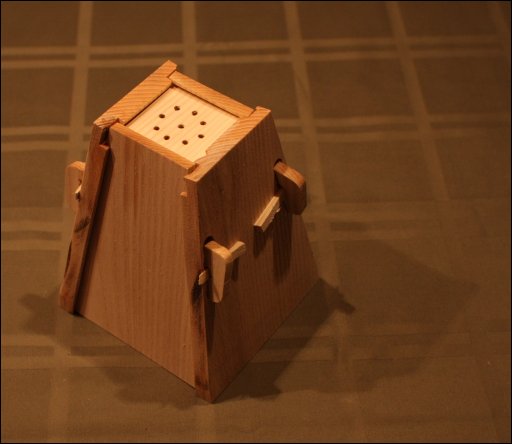
I should have made a half recipe but I didn't.  My goodness, it made a large quantity of paskha!  I don't have a traditional paskha mould, although the other recipe I saw mentions you can use a new, clean, large ceramic flower pot.  The traditional shape is a pyramid.

From:  https://erik.nygren.org/category/crafts-food.html
So I used one medium mixing bowl and two smaller dessert moulds.  I lined the moulds with damp cheese cloth and the mixing bowl with a damp white cotton cloth.

Mixing bowl.
Full mould.

Partially filled mould.
Once I found a place for each in the refrigerator, I placed a weight on top of the bowl and one mould.  The other mould was only partly filled so I decided to see what it was like without a weight on it.

The weight was heavy but low so it fit under the shelf.
The next morning I removed the two smaller versions and put them on plates.  Each required a little tidying up (wiping the edges of the plates, smoothing out some bumps and dips on the paskha) and then I decorated them with a few raisins, fresh mint leaves, and slivers of lemon peel.

Rounded fluted edges
From above
Sharper fluted edges


From above
The Verdict

I expected it to be heavy.  I expected it to be rich.  I expected a sweet cheese "pudding" of sorts.

I was surprised!  It was much lighter than expected, probably because of the close to 10 minutes of continuous beating with the mixer.  It was rich but not overwhelmingly so.  The three guest tasters all agreed it was good for a few bites and then the richness kicked in and our taste buds were satisfied.  Like a good cheesecake, a little goes a long way.

The flavor was delightfully lemony.  The cheese and butter provided a creamy base and the sugar made it lightly sweet.  I was glad I toasted the almonds because they contributed a little umami to some of the bites.  I wish I had put in more cardamom (1 teaspoon?) because I couldn't really taste it.  However that might have been too much competition with the lemon.  The raisins were an occasional chewy counterpoint.

The texture was grainy visually but nicely smooth to the tongue except when encountering the nuts and raisins.  They kept it from being too uniform in texture.

The weighted mould's paskha seemed to have shaped to the mould better than the unweighted one.  Both were thicker and drier than I had expected when I ladled the mixture into the containers the night before.  I was happy to have used the cheesecloth for both as it made getting the paskha out of the mould easy.  I just jiggled the cloth gently all around the edges, put the plate on top (with the cloth out to the sides), and flipped the whole thing.

I have not yet turned out the larger bowl of paskha.  I think I will take it to work tomorrow and share the goodness.  If I were to do this again I would make a half recipe (3 yolks) unless I knew I was feeding a crowd.

Success!  Wonderfully so!

Tuesday, June 3, 2014

Baked Cottage Cheese Pudding -- Take 2

This is an update on the Russian dish, "Baked Cottage Cheese Pudding", originally posted on 1 June 2014.  

I tried this recipe again, doubling it because the size of the cottage cheese carton makes that convenient.  I used only finely grated orange zest and some extra sugar as the flavoring.  The entire batch went into the pie pan.

It took longer to cook, as I expected: about 45 minutes at 375 degrees Fahrenheit in a ceramic pan.  I liked that the top browned and did not get rubbery at all, that the filling was thicker and therefore more tender, the flavor was great, and the overall look was more substantial.

The only problem was that the mixture was very watery after baking.  I am not certain but I think the different brand of cottage cheese was wetter than in the first attempt.  So my solution would be to either add more semolina to absorb the water or drain the cheese before adding it to the mix.

This is really a tasty dish!  I had it for breakfast with some grapes and poached eggs.  Excellent with sour cream and a bit of key lime marmalade.  Success, again!

Addendum:  I had the leftovers a few days later and I still think it tastes better cold.  

Sunday, June 1, 2014

Baked Cottage Cheese Pudding -- A Russian "Twofer"

Many (but not too many) years ago some friends went to Russia to adopt a daughter.  While they were gone, I helped out with some of their responsibilities.  When they returned, they brought me this book, Russian Cuisine, by Lydia Lyakhovskaya:

ISBN 5-8194-0010-0
It is a charming book with a lot of great pictures, some cute illustrations, and interesting authentic recipes. 

The recipe that drew my attention was Baked Cottage Cheese Pudding (page 66). It is in the category of "Cereals, Pasta Poaches, and Omelettes" and is presented as a lovely dish to serve when having tea or coffee. 

Baked Cottage Cheese Pudding

1 cup cottage cheese
1 egg
1 tsp. sugar
a dint each of salt and soda
1 tbsp. semolina
1 tbsp. candied orange peel or a handful of raisins
1 tbsp. butter
1 tbsp. bread crumbs

Ready to be doubled.
Rub cottage cheese with salt, sugar and egg, add semolina and soda, stir until well blended and spread as an even coat in a buttered mould or pan sprinkled with bread crumbs.  Bake in a 356 to 392 degree oven until brown.  Serve the fritter with sour cream, honey, jam, cranberry or currants ground with sugar, for tea and coffee.

My Notes

Notice there are no directions for what to do with the orange peel or raisins.  The picture looked like the orange peel may have been scattered across the top but it was hard to tell if it was before or after baking. 

I was having trouble deciding if I wanted to use the orange peel or the raisins and then I realized one container of cottage cheese was big enough for a double recipe! 

I wasn't sure how much a "dint" was, much less doubling a dint, so I treated it like a "pinch" and made the doubled measure about 1/8 teaspoon.

The soda was baking soda and it made the mixture bubble just a little bit.

After I made the doubled recipe but before I spread it into the pan, I split the mixture into two bowls.  Two and half cups split into one and a quarter cups per bowl.  Then I mixed in a handful of raisins into one and about 1/2 teaspoon finely grated orange zest and 1 teaspoon of extra sugar into the other.  (Candied orange peel does not last long around my house!)

Each flavor went into a buttered pie pan.  My bread crumbs were homemade and rather large.  Some would compare them to Panko crumbs.  They kept the pudding from sticking to the pan, as desired, but also formed a nice crunchy crust on the finished product.  That really added to the overall texture.

Ready for the oven.
 The two pans baked at 375 degrees Fahrenheit for 25 minutes.  They smelled delicious and the crumbs browned. 

Ready for eating.
The Verdict

Taking the advice of the recipe, I served the puddings with hot tea in a clear glass cup.  The cup has a map of the world on it, so I enjoyed looking at Russia while I dined.

Ready to please.
I tried the puddings both hot and cool.  I liked the cool best because the flavors came through clearly.  My first reaction was that I absolutely loved the orange peel one and imagined that the raisin one wouldn't be as good.  As it turned out, the raisin pudding was very good, too. 

The puddings were each very thin.  The surface was a little rubbery and the inside was soft and creamy.  The rubbery did not detract from the flavor or texture.   The orange flavor with the cheese was outstanding.  The raisins added a bit of sweet chewiness.  I think it might be tasty to put both orange peel and raisins some time!

After the initial taste as they were out of the pan, I tried them with sour cream -- an excellent accompaniment, especially with the raisins -- and with strawberry jam and orange marmalade.  The jams were good, too, but I thought they overwhelmed the flavor of the orange peel.  My guest taste tester thought everything was good and loved both the sour cream and jam on them. 

I declare it a success!  This was so easy to do and very tasty.  I think it would make a good breakfast or brunch dish, along with some grapes and perhaps a croissant or a bagel.  It was quite excellent with tea.

I called this a "twofer" because I got two flavors from one recipe.  I'll add in another twofer by mentioning that the next page talked about "Cottage Cheese Fritters" which is this recipe except use 2 tbsp. wheat flour instead of semolina.  Roll the batter into a round strip, cut into pieces, shape them into an oval or round shape, then saute' in butter on both sides until brown.  Sounds like a good camping recipe to me.


Cookies Consent

This website uses cookies to offer you a better Browsing Experience. By using our website, You agree to the use of Cookies

Learn More